Why Is Vue Called Vue? The Name Came From Google Translate

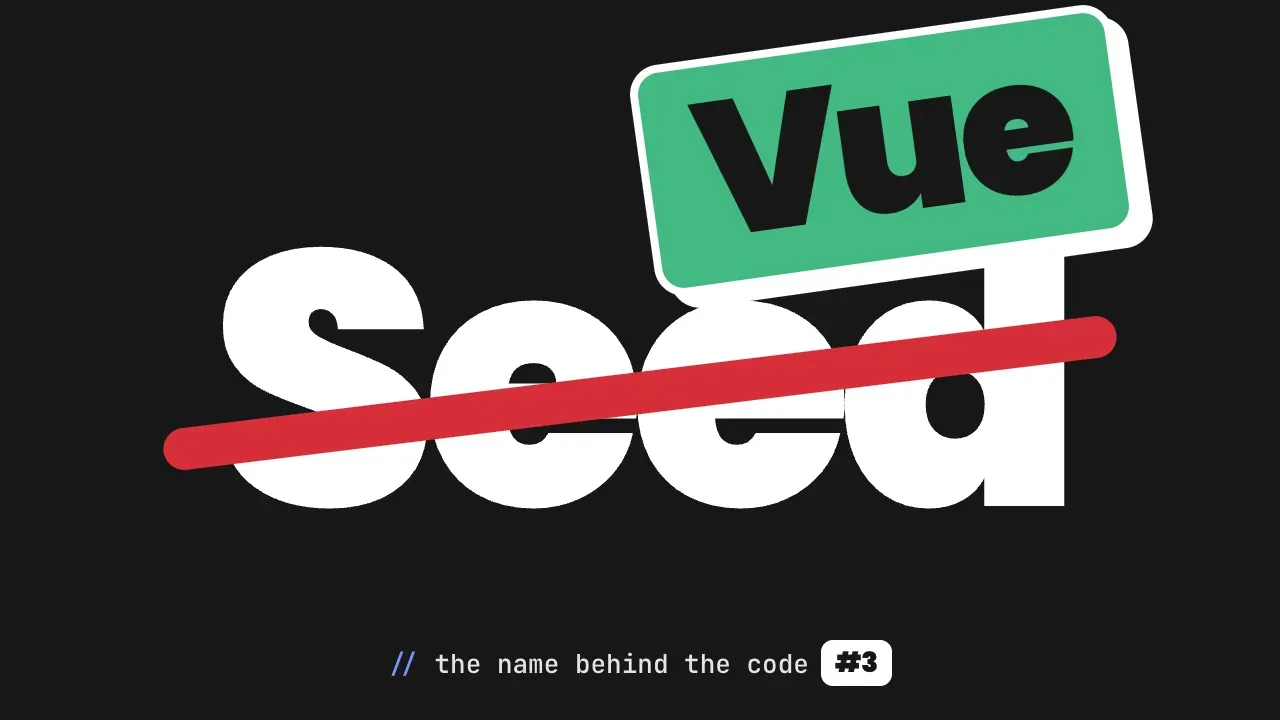
Vue is one of the most used JavaScript frameworks in the world, and its name is a French word. It wasn't picked out of taste. Its creator, Evan You, typed "view" into Google Translate because the name he really wanted was already taken on npm.
Before landing on "Vue", the project went through two other names in a few days. The story involves a prototype at Google, a package from 2011 nobody expected to find, a tweet from another programmer and a leap without a safety net. If you'd rather watch, the video above tells it in about 3 minutes. It's in Portuguese, with captions.
How did Vue start inside Google?
In 2013, Evan You worked at Google Creative Lab, a small team that built quick interface prototypes. He used Angular, Google's own framework, for that. The problem was that for small prototypes Angular felt too heavy, according to his 2017 interview with freeCodeCamp.
The idea was to extract just the part he liked most: declarative data binding, which connects your data to the screen. Think of a spreadsheet: you change a number and the total updates by itself. With data binding, changing the data changes the screen, and you don't touch the screen by hand.
What were Vue's old names, Element and Seed?
The project's first commit landed on July 27, 2013, and the package was called Element. The name lasted one day: on July 28, 2013, a commit with the message "rename" switched it to Seed. Both commits are in the Vue repository history, at 83fac01 (Element) and 871ed91 (Seed).
No French so far. The name changed again only because the next step went wrong.
Why didn't the name Seed work on npm?
npm is JavaScript's package store, and two packages can't share a name. When it was time to publish, Evan found that seed had belonged to someone else since October 3, 2011. It was another programmer's package (Jake Luer, according to the npm registry) for working with datasets, with nothing to do with interfaces.
The stopgap was to publish the project as seed-mvvm, which happened on August 25, 2013, per the registry entry for that package. It works, but nobody memorizes a name like that. The project needed something short, free on npm and brand-worthy.
How did Google Translate give Vue its name?
The project handled the view, the part you see: the screen. But calling the framework "View" in English felt too literal. Instead of racking his brain, Evan typed the word into Google Translate and stopped at the French: vue. Three letters, a nice name and, most importantly, free on npm. He tells this in Vue.js: The Documentary.
The rename happened in version 0.6.0, on December 7, 2013, according to commit cdd0716. In the documentary Evan says 2014, but the commit date is the one used here.
How do you pronounce Vue?
The official pronunciation is "view", the same as the English word, and the introduction in the docs shows the transcription /vjuː/. It is not "vee-you-ee", which is how many Portuguese speakers read the three letters.
How did Vue get famous without a big tech company behind it?
A good name doesn't make anyone adopt a framework. Three things moved it forward, all told by Evan himself:
- Hacker News. In February 2014 he presented Vue on that programmers' forum. The post reached the front page and earned a few hundred GitHub stars in the first week.
- A tweet from Taylor Otwell. The creator of Laravel, a popular PHP framework, said that learning React was hard and that he was learning Vue. The Laravel community followed and adopted Vue in early 2015. I couldn't check the exact wording of the tweet, so it appears paraphrased here.
- Chinese documentation. The translation helped the framework spread across China.
React was born inside Facebook, with a whole team. Vue was born from one person and grew with the support of the people using it.
How did Evan You end up working on Vue full time?
Evan worked at Google and later at Meteor. He went to Vue full time when donations on Patreon, a monthly donation site, reached US$4,000 per month, according to the freeCodeCamp interview. He quit his job and started living off the project, with no corporate owner, which is still true: Vue doesn't belong to any big tech company.
Is Vue only about the screen? What is a progressive framework?
The name means "the screen", but the project grew far beyond that. It gained routing and state management, and Evan himself calls Vue a progressive framework: a small core with data binding and components, and everything else optional. You use only what you need.
The same creator made Vite, released in 2020 and now used in React projects too. The irony is that a name meaning only "the screen" ended up naming a whole ecosystem.
In short
Vue is "view" in French, found in Google Translate because the name Seed had belonged to another npm package since 2011. Before that, the project was Element and Seed within a few days in July 2013. The rename came in version 0.6.0, on December 7, 2013, and the official pronunciation is "view". The framework grew thanks to Hacker News, a tweet from a Laravel creator and Chinese documentation, and with no big tech company as its owner.
This article is part of the series The Name Behind the Code on the Código ao Ponto channel.
Sources
- Between the Wires: an interview with Vue.js creator Evan You (freeCodeCamp, 2017)
- Vue.js: The Documentary (2020)
- Commit 83fac01, first commit, named Element (GitHub, 2013-07-27)
- Commit 871ed91, rename to Seed (GitHub, 2013-07-28)
- Commit cdd0716, rename to Vue (0.6.0) (GitHub, 2013-12-07)
- seed package and seed-mvvm package (npm registry)
- Introduction to Vue (official docs, pronunciation)
- Facts checked on November 9, 2026 during the video research.